
Extruder For Puffed Food
Inquiry
Introduction
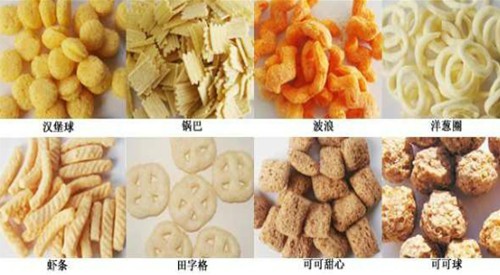
 Principles And Characteristics Of Puffing And Extrusion Technology
Extrusion technology, as a novel food production technology, is gradually being widely applied in the food industry, especially in the production of snack puffed foods. As a type of snack food, puffed foods are very popular with consumers, especially teenagers. In the United States, which prides itself on being a snack food kingdom, the annual sales of various snack foods reach $5 billion, of which 30% are potato chips. It is certain that the production of puffed foods has a very broad future and promising prospects.
Extrusion technology has a long history in my country; popcorn and various fried foods are examples of puffed foods. However, the application of modern extrusion technology in the production of puffed foods is relatively recent. Due to insufficient attention paid to research and development by manufacturers, the flavors are monotonous and the variety is limited, far from meeting the needs of people with increasingly higher living standards. Therefore, vigorously developing extrusion technology and accelerating its application in food production to promote the development of my country's food industry is a key issue that food scientists need to focus on.
Classification Of Puffed Foods
▪ By Raw Materials
Unprocessed granules, semi-processed granules, and processed powders
▪ By Edible Grade
Staple food puffed foods, side dish puffed foods, puffed snacks, fortified puffed foods, etc.
▪ By Puffing Method
Extruded puffed foods, air-puffed foods, fried puffed foods, baked puffed foods, microwave puffed foods
▪ By Production Process
Direct puffing and indirect puffing
Characteristics of puffed foods
▪ Not easily reverted to its original state, suitable for long-term storage
▪ Minimal nutrient loss, beneficial for human digestion and absorption
▪ Good taste
▪ Good flavor, convenient to eat
▪ High hygiene standards, good preservation performance
Commonly Used Extrusion Equipment Classification
By raw material: Grain puffing and textured protein puffing
By heat source: Self-heating and external heating
By heating method: Solid fuel, gaseous fuel, superheated steam, mechanical friction, electricity
By pressure application method: Mechanical heating and pneumatic explosion
By equipment production method: Intermittent and continuous
By puffed form: Popcorn type and extrusion type
Extrusion Puffing Equipment
Driven by the screw of an extruder, the material is forced forward, subjected to mixing, stirring, friction, and high shear forces. This causes the starch granules to break down, while the temperature and pressure inside the extruder cavity rise (temperatures can reach 150–200°C, and pressures can exceed 1 MPa). The material is then extruded instantaneously through a die of a specific shape, undergoing a sudden drop from high temperature and pressure to normal temperature and pressure. Under this pressure difference, free water rapidly vaporizes, expanding in volume approximately 2000 times. During this extrusion process, the grain structure changes, transforming raw starch (β-starch) into mature starch (α-starch), which then becomes a layered, loose, spongy mass. The grain volume expands several to more than ten times.
Extrusion Puffing Process
1) It is a high-temperature and high-pressure process;
2) The pressure, shear force, action, and time of the extrusion process can be easily adjusted;
3) The extrusion process can be applied to certain biochemical reaction processes requiring high temperature and high pressure;
Most food extruders organically combine heating, cooking, and extrusion molding, so that the raw materials, after passing through the extruder, become cooked or semi-cooked products with a certain shape and texture.
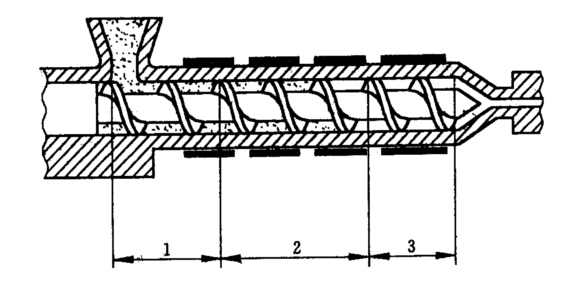
Figure 2. Schematic diagram of the extrusion process
1. Feeding and conveying section
2. Compression and melting section
3. Metering and homogenization section
Operational Variables Affecting Extrusion Operations Include
(1) Type of Extruder: Choosing between a single-screw or twin-screw extruder is a crucial decision when producing extruded products. These extruders generate significantly different forces, just as the products they produce differ greatly.
(2) Feed Rate: At a given extrusion speed, the feed rate determines the degree of screw filling in the final processing step.
(3) Screw Geometry: The characteristics of the screw itself determine the magnitude of the force applied to the material as it is extruded through the extruder. In a single-screw extruder, adjustable parameters include the screw pitch, screw diameter, the clearance between the top of the thread and the cavity, and the number of threads on the screw. For twin-screw extruders, the range of selectable screw geometries is extensive.
(4) Extruder Length: The length of the extruder largely determines the pressure at the extruder die and the degree of reaction in the material. Longer extruders typically generate higher pressures due to the increased metering section. A long screw prolongs the residence time of material within the extruder, affecting the nature of chemical reactions (such as gelatinization) and physical processes (such as mixing and shearing).
(5) Screw Speed: A key variable operating parameter in extrusion processing is the screw speed. Screw speed influences the degree of material filling the screw, the residence time distribution of material through the extruder, the rate of heat transfer, the input of mechanical energy to the extruder, and the magnitude of shear forces exerted on the material.
(6) Die Characteristics: The shape of the die and the area of the discharge port play a crucial role in determining the characteristics of the extruded product.
(7) Chamber Temperature: Most extruders are operated by controlling the temperature, either through heating or cooling. The degree of heating or cooling depends on the type of extruder, its operating characteristics, and the extruded food product being produced. The temperature of the material within the extruder affects the degree of cooking of the raw material, which in turn affects the rheological properties of the material. Therefore, heating or cooling has a significant impact on extruder operation.
Technical Parameters
| 200~250kg/h Core Filled Snack Food Production Line | |||||
| NO. | Name | MODEL | QTY | SPECIFICATION | Remark |
| 1 | Flour Mixer | BF-50 | 1 | Output: 50kg/batch(5min/batch) | To mix all raw material together with water |
| 2 | Screw Conveyor | LS-300 | 1 | Output:100~300kg/h | To transport mixed raw material from mixer to extruder hopper |
| 3 | Twin-Screw Extruder | KY-65 | 1 | Capacity:200~250kg/h | To cook and puff the raw material into different shapes through different dies |
| 4 | Core filler | JX-300 | 1 | Volume: Adjustable | Pour the chocolate into the tubular food products |
| 5 | Shaping & Cutting Machine | ZQ-II | 1 | Capacity: according to extruder | To ship and cut the core-filled tube into(adjustabe length) |
| 6 | Conveyor | SS-600 | 1 | Capacity: according to extruder | To ship the product onto dryer machine |
| 7 | 5-Layer Dryer(Electricity) | DKX-V | 1 | Output:300kg/h | To dry the product and give more crunchy taste and longer shelf life |
Engineering Case


Other applications


+86-25-84439591
Address: No. 19 Yunlong Road, Tao Wu Industrial Park, Jiangning District, Nanjing City
Mobile phone: 13801580926 / 13770651639
Email: admin@chinakaiyou.com
Copyright © 2025 Nanjing Kaiyou Rubber & Plastic Machinery Co., Ltd.